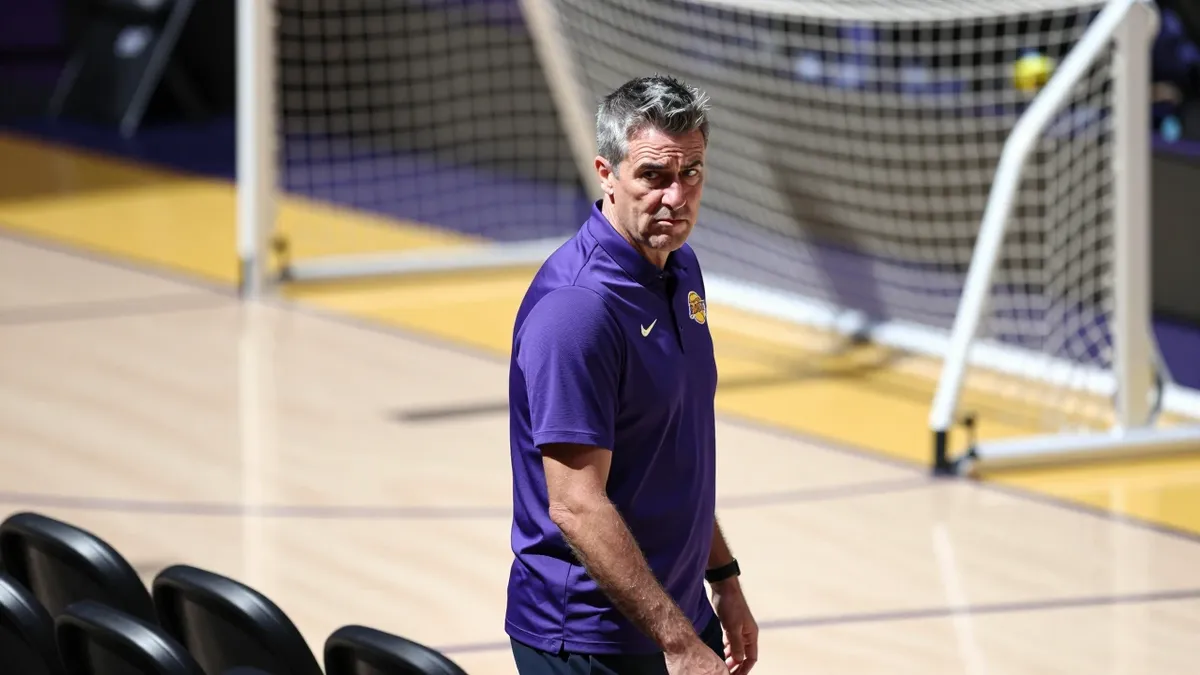

UCLA has hired former Los Angeles Lakers executive Tim Harris as its new athletic director and CEO, replacing the fired Martin Jarmond. The move, announced Monday by Chancellor Julio Frenk, aims to address the athletic department's unsustainable financial path which has run deficits for seven straight years.
What happened with the UCLA athletic director change?
Chancellor Julio Frenk announced the immediate firing of Martin Jarmond in a letter to the university community. Jarmond, who held the position for six years, signed a five-year contract extension just months ago in May 2024. Tim Harris, the former longtime president of business operations for the Los Angeles Lakers, will take over the role. Harris will work on a pro bono basis and holds the combined title of CEO and athletic director.
Harris is a UCLA alumnus, graduating in 1989 with a sociology degree. He played goalkeeper for the men's soccer team during his time in Westwood. His professional career was spent almost entirely with the Lakers, spanning over 35 years before his departure in February. That exit came four months after the Buss family sold the NBA franchise to Los Angeles Dodgers owner Mark Walter. Harris was among Lakers governor Jeanie Buss's inner circle who received a major financial bonus after the sale.
Why did UCLA make this move now?
The primary driver is a severe and persistent financial crisis within UCLA Athletics. During Jarmond's tenure, the department recorded yearly financial shortfalls for seven consecutive years. These deficits total a staggering $241 million. The university has repeatedly provided bailouts to keep the operation afloat.
Frenk explicitly cited the money problems as the reason for the leadership change. "UCLA Athletics currently carries a significant financial debt, and its current path is not sustainable," Frenk wrote. He emphasized the need for a new model that supports itself through generated revenue. The recent move to the Big Ten Conference two years ago brought in millions in media rights but also increased travel costs, complicating the financial picture. The deficit was reduced to $21.6 million for the 2025 fiscal year.
What is Tim Harris's background with the Los Angeles Lakers?
Tim Harris was a central figure in the Lakers' business operations for more than three decades. He served as president of business operations, placing him in Jeanie Buss's inner circle. Following the sale of the team to Mark Walter's group, Harris was among those who received a major financial bonus. His deep experience in revenue generation and franchise management at the highest level of professional sports is clearly what UCLA is banking on.
His hiring signals a desire to apply NBA-level business acumen to college athletics. Frenk mentioned the rapid transformation of college sports, fueled by name, image and likeness deals. "UCLA must have an athletics model that leads, not just keeps pace," he stated. Harris's pro bono status also immediately alleviates some salary pressure on the department's budget.
What's next for UCLA Athletics under new leadership?
Harris's immediate task is to build a financially self-sustaining model. Frenk's letter outlined goals of protecting the breadth of sports programs, creating new opportunities, and having athletics support itself. The department did see its deficit reduced to $21.6 million for the 2025 fiscal year, but the hole remains deep.
Jarmond leaves just as his final major coaching hire is about to debut. New football coach Bob Chesney, hired from James Madison in early December, will lead the Bruins in their season opener at California on Saturday. Harris will now oversee this critical football revival effort. The broader challenge is navigating the new era of college sports while stopping the financial bleeding that has plagued the department for nearly a decade. Fans can track the performance of UCLA's revenue programs and their impact on the standings as the new era begins.